Category: Lomi Pro Business and Entrepreneurship

  • The Authenticity ROI: Why Transparency is the Most Profitable Marketing Move You Can Make.

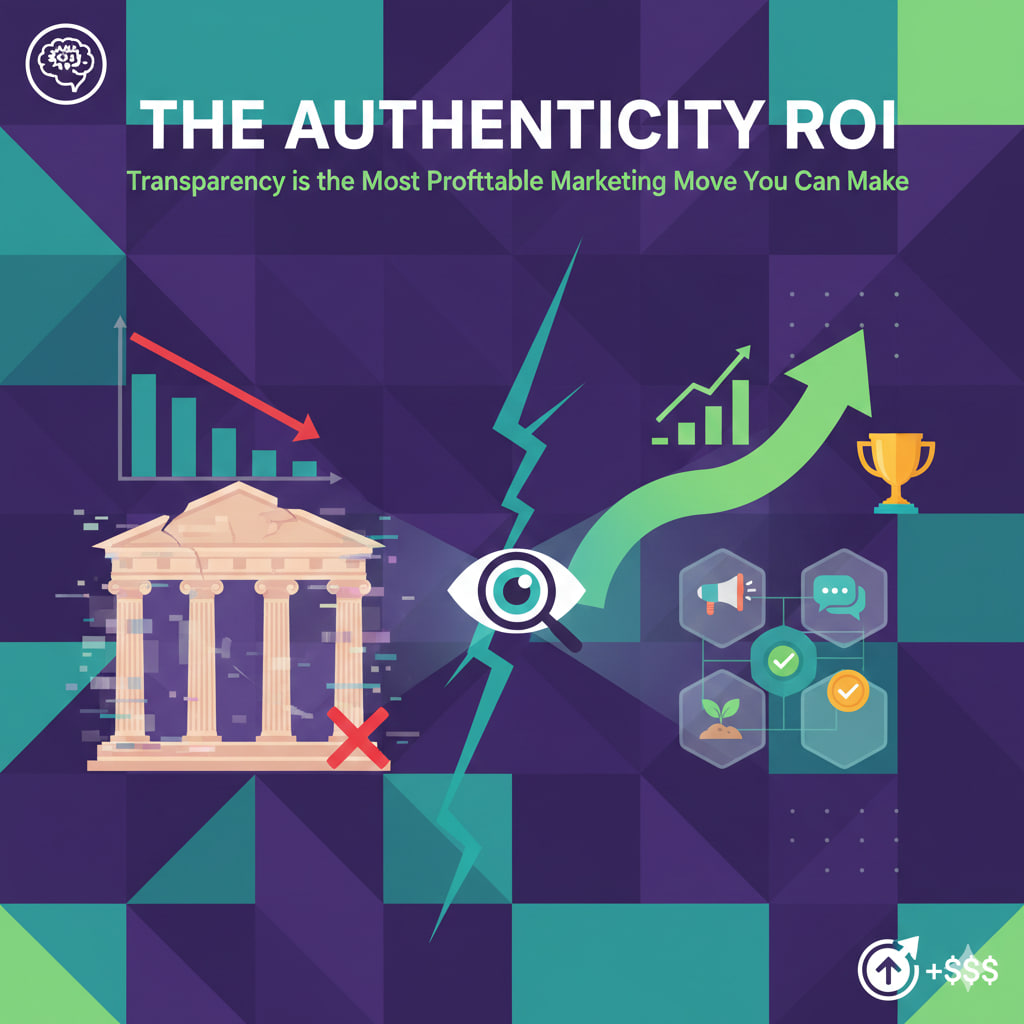
    The Authenticity ROI: Why Transparency is the Most Profitable Marketing Move You Can Make.

    In 2026, we are living through a “Truth Crisis.” With the internet flooded by AI-generated deepfakes and overly polished “corporate-speak,” consumers have developed a hyper-sensitive radar for anything that feels fake.

    The result? Authenticity has shifted from a “nice-to-have” value to a measurable financial asset. When you stop trying to look perfect and start being transparent, you don’t just win trust—you win the market.


    📉 The High Cost of the “Perfect” Facade

    Companies that spend millions airbrushing their image are seeing diminishing returns. Why?

    • The Skepticism Tax: Modern consumers (especially Gen Z and Gen Alpha) assume a “perfect” brand is hiding something.
    • The Correction Cycle: If you hide a flaw and the internet finds it (which it always does), the cost of the PR cleanup is 10x the cost of just admitting the flaw upfront.

    💰 How Transparency Drives ROI

    Transparency isn’t just about admitting mistakes; it’s a strategic marketing tool that lowers costs and increases loyalty.

    1. Lower Customer Acquisition Cost (CAC)

    When you are transparent about who your product is not for, you stop wasting ad spend on the wrong leads. By saying, “Our software is great for freelancers but too simple for large corporations,” you build instant credibility with the freelancers who actually need you.

    2. The “Flaw-Fidelity” Effect

    Psychological studies show that people trust a 4.2-star rated product with honest, mixed reviews more than a “perfect” 5.0-star product. Transparency creates a “human” connection that makes customers more likely to forgive minor hiccups later on.+1

    3. Radically Reduced Churn

    Transparency in pricing and “building in public” gives customers a sense of ownership. If they know why a price is increasing or how a feature is being built, they are far less likely to cancel their subscription.+1


    🛠️ 3 Ways to Inject Transparency Today

    • The “Anti-Pitch”: In your next marketing campaign, lead with a limitation. Example: “It’s not the cheapest option on the market, but it’s the only one that guarantees 99.9% uptime.”
    • The “Behind the Curtain” Content: Share your internal processes, your failures, and your “unfiltered” meetings. This creates a “parasocial” bond where the customer feels like an insider.
    • The Honest Mistake: When something goes wrong (a shipping delay, a server crash), skip the legal jargon. Send an email from the CEO that says: “We messed up. Here is exactly what happened, and here is what we are doing to fix it.”

    📊 The Authenticity Metric

    Traditional MarketingTransparency Marketing
    Goal: Look like the industry leader.Goal: Look like a human solving a problem.
    Tone: Authoritative and polished.Tone: Vulnerable and direct.
    Result: Short-term sales, low loyalty.Result: High LTV (Lifetime Value), brand advocates.

    The 2026 Mandate: In an AI-saturated world, the “human element” is your only true competitive advantage. Being real isn’t just a moral choice; it’s the most profitable strategy you have left.
  • Bootstrapping in 2026: How to Launch a Lean Startup Without Venture Capital.

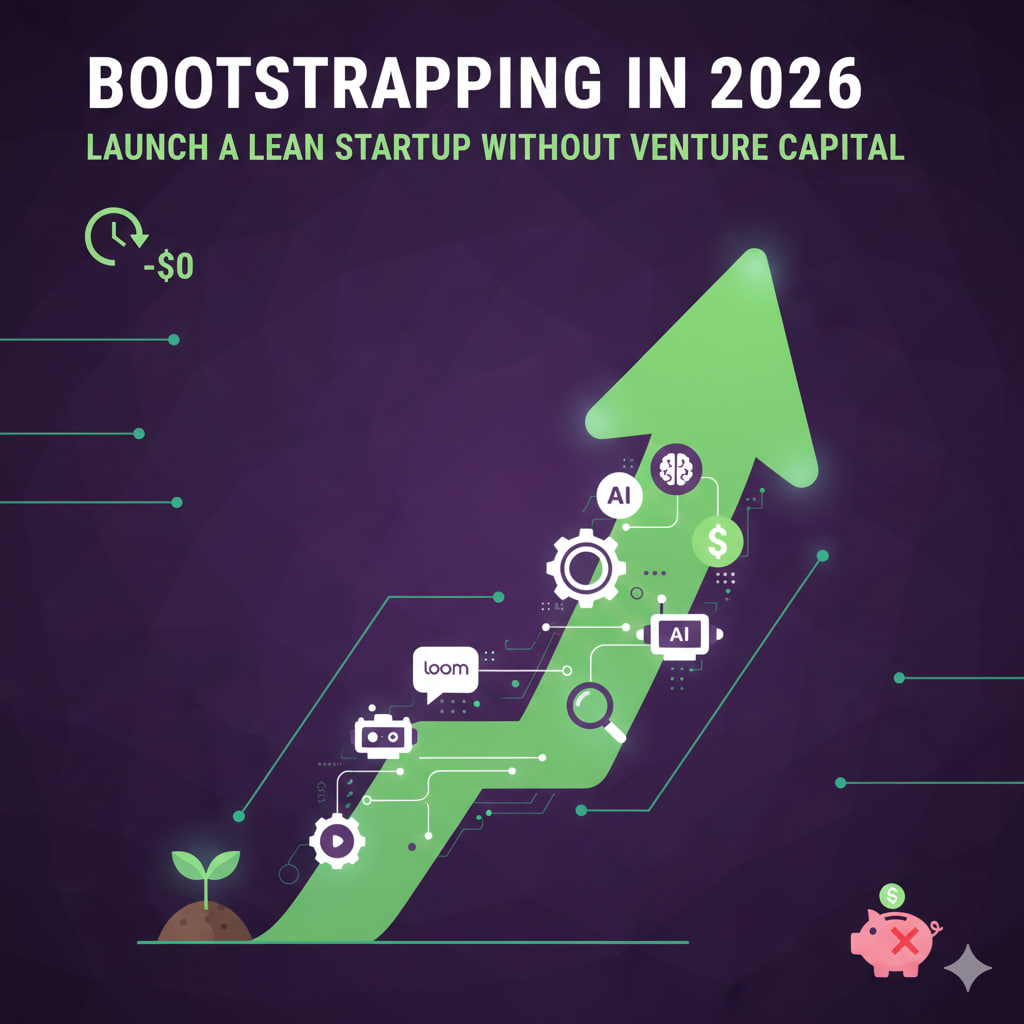
    Bootstrapping in 2026: How to Launch a Lean Startup Without Venture Capital.

    The era of “growth at all costs” fueled by endless venture capital is being replaced by the era of the Efficient Entrepreneur. In 2026, the barrier to entry has never been lower, thanks to a mature AI landscape and “vibe coding” tools that allow non-technical founders to build what used to require a team of ten.

    Bootstrapping isn’t just about being frugal; it’s about maintaining 100% ownership and building a business that is profitable by design, not by accident.


    🛠️ The 2026 “Zero-Capital” Tech Stack

    You no longer need a $50k engineering budget to ship a Minimum Viable Product (MVP).

    • The “Vibe Coding” Layer: Tools like Base44 or Bubble’s AI agent allow you to describe an app in plain English and watch it generate the code, database, and UI in real-time.
    • The AI Employee: Use Gemini or ChatGPT Pro as your fractional CMO, copywriter, and junior developer. They can handle SEO strategy, draft legal terms, and debug the code your no-code tools generate.
    • The Operations Hub: Connect everything with Zapier or Make to automate customer onboarding, invoicing, and support without hiring an ops manager.

    🎯 The “Lean” Strategy: Behavior-Based Validation

    In 2026, “Lean” doesn’t mean cheap; it means ruthless prioritization. Don’t waste time on “vanity validation” (likes or email signups). Instead, look for cost-based commitment:

    1. The Pre-Sale: Ask users to pay a discounted “founding member” fee before the product is fully built.
    2. The Workflow Test: Can your user complete their “core task” (e.g., generating a report or booking a service) with your bare-bones tool? If not, you’re building too much.
    3. The 10% Rule: Keep 90% of your focus on the one feature that solves the biggest pain point. Ignore the “nice-to-haves” until you have 100 paying customers.

    📣 Organic Growth: Beating the Paid Ad Trap

    With ad costs at an all-time high, bootstrapped startups must win through Authority and Community.

    • The Personal Brand ROI: Founders who document their “Build in Public” journey on LinkedIn or X (Twitter) attract customers for free. Transparency builds trust that a $10,000 ad campaign cannot.
    • AI-Enhanced Content: Use tools like Writesonic or Surfer SEO to find gaps in AI search results (SGE) and position your content as the definitive answer for niche problems.
    • Referral Loops: Build your marketing into the product. If your tool helps a user create a report, make that report shareable with a “Powered by [Your Startup]” link.

    📉 Survival Metrics for the Self-Funded

    Forget “Monthly Active Users.” If you’re bootstrapping, these are the only numbers that matter: | Metric | Why it Matters in 2026 | | :— | :— | | Burn Rate | How many months you can survive if revenue hits zero today. | | LTV / CAC | Your customer’s lifetime value must be at least 3x what it cost to get them. | | Time to Revenue | The number of days from “Idea” to “First Dollar.” Aim for < 30 days. |


    The 2026 Reality: A solo founder with a $200/month software budget can now out-execute a VC-backed team of twenty. Your greatest advantage is your speed to pivot—use it.

  • The Pivot Point: Signs Your Small Business Needs a Strategy Shift (And How to Do It).

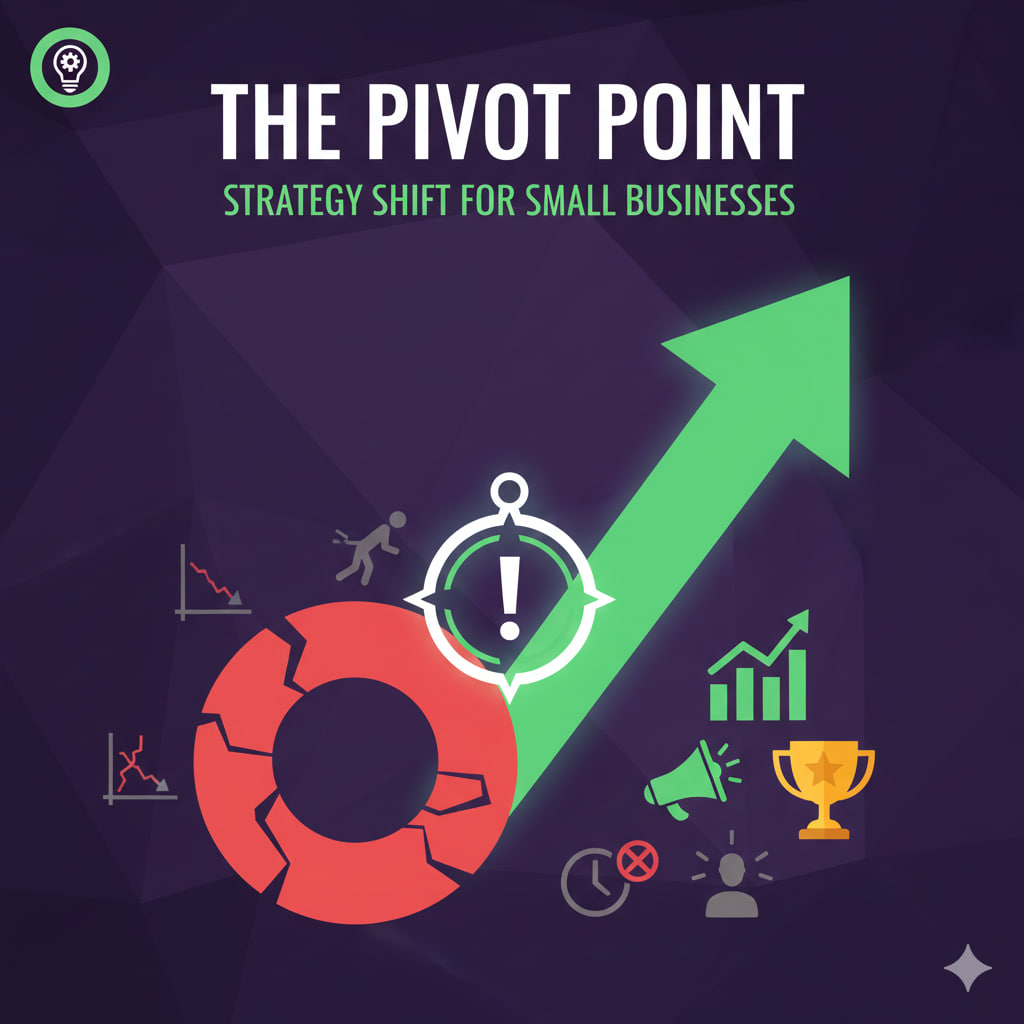
    The Pivot Point: Signs Your Small Business Needs a Strategy Shift (And How to Do It).

    In the business world, “pivoting” isn’t just a buzzword; it’s a survival mechanism. A pivot occurs when a company shifts its business strategy to accommodate changes in its industry, customer preferences, or internal performance. It’s not an admission of failure—it’s an evolution based on data.

    History is full of successful pivots: Slack started as a failed video game’s internal chat tool, and YouTube began as a video dating site.


    🚩 5 Warning Signs You’re at the “Pivot Point”

    Recognizing the need for change before your capital runs dry is the difference between a successful shift and a shuttered shop.

    1. Stagnant Growth Despite High Effort: You’re working harder than ever, but your revenue or user base has plateaued for 6+ months.
    2. High Customer Acquisition Cost (CAC): It costs you more to get a customer than that customer is actually worth to your business (LTV).
    3. The “Feature” is the Product: You notice your customers are only using one small part of your service and ignoring everything else.
    4. Market Shifts: A new technology or competitor has made your primary offering less “essential” and more “nice-to-have.”
    5. Employee Burnout/Disengagement: If your team no longer believes in the mission because the results aren’t following, the mission likely needs a refresh.

    🛠️ How to Pivot Without Crashing

    A pivot is a “change in vision, not a change in destination.” Here is how to execute it systematically:

    Phase 1: The Post-Mortem

    Analyze what actually worked. Use the Pareto Principle: identify the 20% of your activities that provided 80% of your results. That 20% is usually where your new direction lies.

    Phase 2: The MVP (Minimum Viable Pivot)

    Don’t rebuild the entire company in secret. Create a “lite” version of your new strategy and test it with a small group of existing customers.

    Shutterstock

    Explore

    Phase 3: The “Kill Your Darlings” Stage

    This is the hardest part. You must stop spending money and time on the old strategy. Keeping one foot in the old world and one in the new leads to “strategic drift,” which drains resources and confuses your brand.

    Phase 4: Over-Communicate

    A pivot can be scary for employees and investors. Be transparent about:

    • Why the change is happening (show the data).
    • What the new goals look like.
    • How it benefits them in the long run.

    💡 The Pivot Spectrum

    Not every pivot is a total 180-degree turn. You might consider:

    • Zoom-In Pivot: Focusing on a single feature of your previous product.
    • Customer Segment Pivot: Selling the same product but to a completely different type of buyer.
    • Channel Pivot: Changing how you deliver your value (e.g., shifting from a retail store to a subscription-based delivery model).