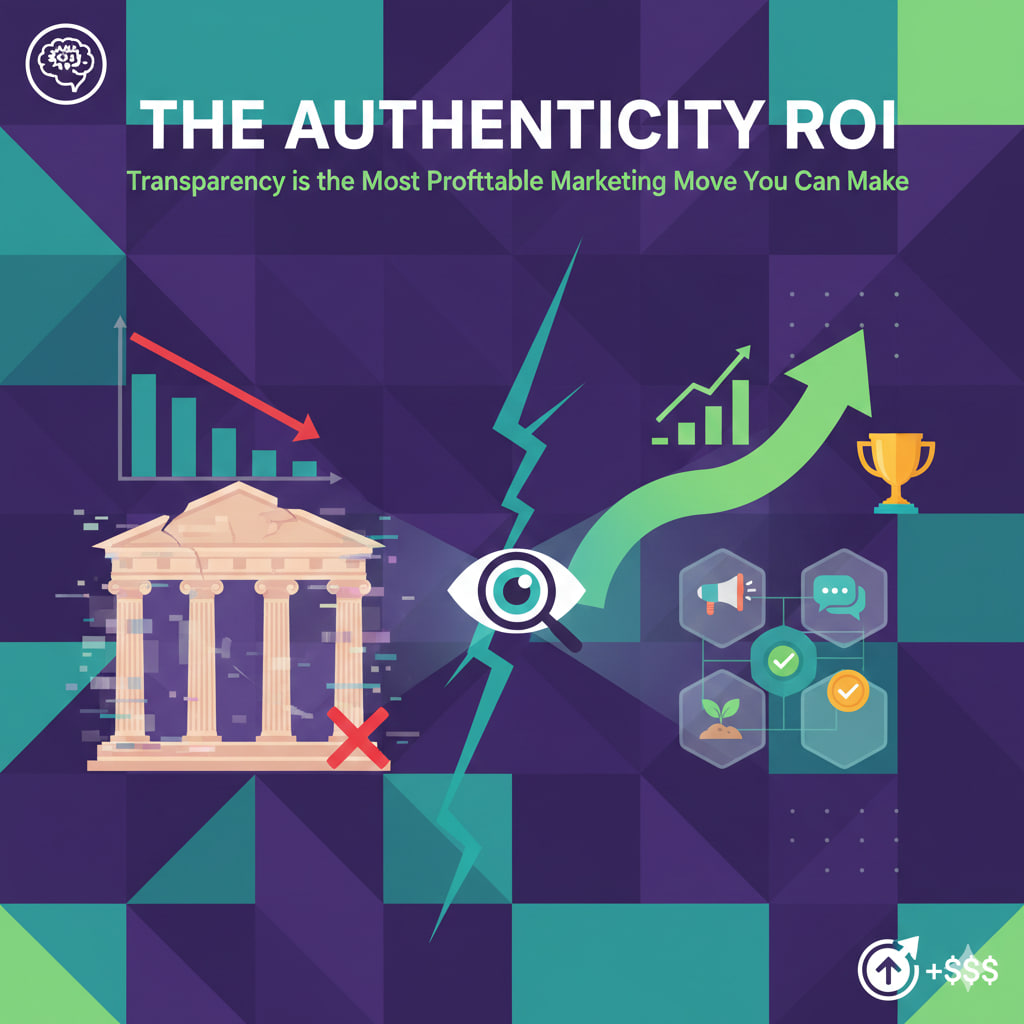
In 2026, we are living through a “Truth Crisis.” With the internet flooded by AI-generated deepfakes and overly polished “corporate-speak,” consumers have developed a hyper-sensitive radar for anything that feels fake.
The result? Authenticity has shifted from a “nice-to-have” value to a measurable financial asset. When you stop trying to look perfect and start being transparent, you don’t just win trust—you win the market.
📉 The High Cost of the “Perfect” Facade
Companies that spend millions airbrushing their image are seeing diminishing returns. Why?
- The Skepticism Tax: Modern consumers (especially Gen Z and Gen Alpha) assume a “perfect” brand is hiding something.
- The Correction Cycle: If you hide a flaw and the internet finds it (which it always does), the cost of the PR cleanup is 10x the cost of just admitting the flaw upfront.
💰 How Transparency Drives ROI
Transparency isn’t just about admitting mistakes; it’s a strategic marketing tool that lowers costs and increases loyalty.
1. Lower Customer Acquisition Cost (CAC)
When you are transparent about who your product is not for, you stop wasting ad spend on the wrong leads. By saying, “Our software is great for freelancers but too simple for large corporations,” you build instant credibility with the freelancers who actually need you.
2. The “Flaw-Fidelity” Effect
Psychological studies show that people trust a 4.2-star rated product with honest, mixed reviews more than a “perfect” 5.0-star product. Transparency creates a “human” connection that makes customers more likely to forgive minor hiccups later on.+1
3. Radically Reduced Churn
Transparency in pricing and “building in public” gives customers a sense of ownership. If they know why a price is increasing or how a feature is being built, they are far less likely to cancel their subscription.+1
🛠️ 3 Ways to Inject Transparency Today
- The “Anti-Pitch”: In your next marketing campaign, lead with a limitation. Example: “It’s not the cheapest option on the market, but it’s the only one that guarantees 99.9% uptime.”
- The “Behind the Curtain” Content: Share your internal processes, your failures, and your “unfiltered” meetings. This creates a “parasocial” bond where the customer feels like an insider.
- The Honest Mistake: When something goes wrong (a shipping delay, a server crash), skip the legal jargon. Send an email from the CEO that says: “We messed up. Here is exactly what happened, and here is what we are doing to fix it.”
📊 The Authenticity Metric
| Traditional Marketing | Transparency Marketing |
| Goal: Look like the industry leader. | Goal: Look like a human solving a problem. |
| Tone: Authoritative and polished. | Tone: Vulnerable and direct. |
| Result: Short-term sales, low loyalty. | Result: High LTV (Lifetime Value), brand advocates. |
The 2026 Mandate: In an AI-saturated world, the “human element” is your only true competitive advantage. Being real isn’t just a moral choice; it’s the most profitable strategy you have left.
Leave a Reply