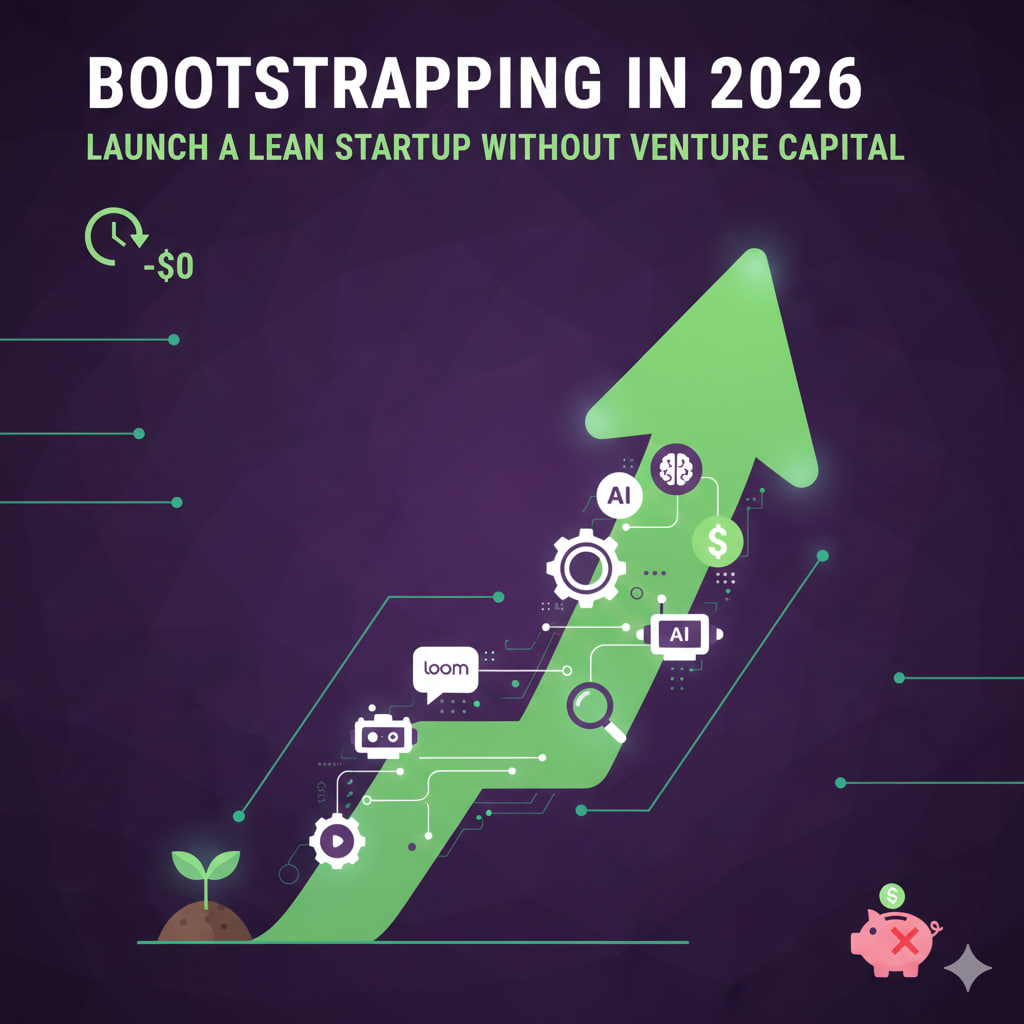
The era of “growth at all costs” fueled by endless venture capital is being replaced by the era of the Efficient Entrepreneur. In 2026, the barrier to entry has never been lower, thanks to a mature AI landscape and “vibe coding” tools that allow non-technical founders to build what used to require a team of ten.
Bootstrapping isn’t just about being frugal; it’s about maintaining 100% ownership and building a business that is profitable by design, not by accident.
🛠️ The 2026 “Zero-Capital” Tech Stack
You no longer need a $50k engineering budget to ship a Minimum Viable Product (MVP).
- The “Vibe Coding” Layer: Tools like Base44 or Bubble’s AI agent allow you to describe an app in plain English and watch it generate the code, database, and UI in real-time.
- The AI Employee: Use Gemini or ChatGPT Pro as your fractional CMO, copywriter, and junior developer. They can handle SEO strategy, draft legal terms, and debug the code your no-code tools generate.
- The Operations Hub: Connect everything with Zapier or Make to automate customer onboarding, invoicing, and support without hiring an ops manager.
🎯 The “Lean” Strategy: Behavior-Based Validation
In 2026, “Lean” doesn’t mean cheap; it means ruthless prioritization. Don’t waste time on “vanity validation” (likes or email signups). Instead, look for cost-based commitment:
- The Pre-Sale: Ask users to pay a discounted “founding member” fee before the product is fully built.
- The Workflow Test: Can your user complete their “core task” (e.g., generating a report or booking a service) with your bare-bones tool? If not, you’re building too much.
- The 10% Rule: Keep 90% of your focus on the one feature that solves the biggest pain point. Ignore the “nice-to-haves” until you have 100 paying customers.
📣 Organic Growth: Beating the Paid Ad Trap
With ad costs at an all-time high, bootstrapped startups must win through Authority and Community.
- The Personal Brand ROI: Founders who document their “Build in Public” journey on LinkedIn or X (Twitter) attract customers for free. Transparency builds trust that a $10,000 ad campaign cannot.
- AI-Enhanced Content: Use tools like Writesonic or Surfer SEO to find gaps in AI search results (SGE) and position your content as the definitive answer for niche problems.
- Referral Loops: Build your marketing into the product. If your tool helps a user create a report, make that report shareable with a “Powered by [Your Startup]” link.
📉 Survival Metrics for the Self-Funded
Forget “Monthly Active Users.” If you’re bootstrapping, these are the only numbers that matter: | Metric | Why it Matters in 2026 | | :— | :— | | Burn Rate | How many months you can survive if revenue hits zero today. | | LTV / CAC | Your customer’s lifetime value must be at least 3x what it cost to get them. | | Time to Revenue | The number of days from “Idea” to “First Dollar.” Aim for < 30 days. |
The 2026 Reality: A solo founder with a $200/month software budget can now out-execute a VC-backed team of twenty. Your greatest advantage is your speed to pivot—use it.
Leave a Reply